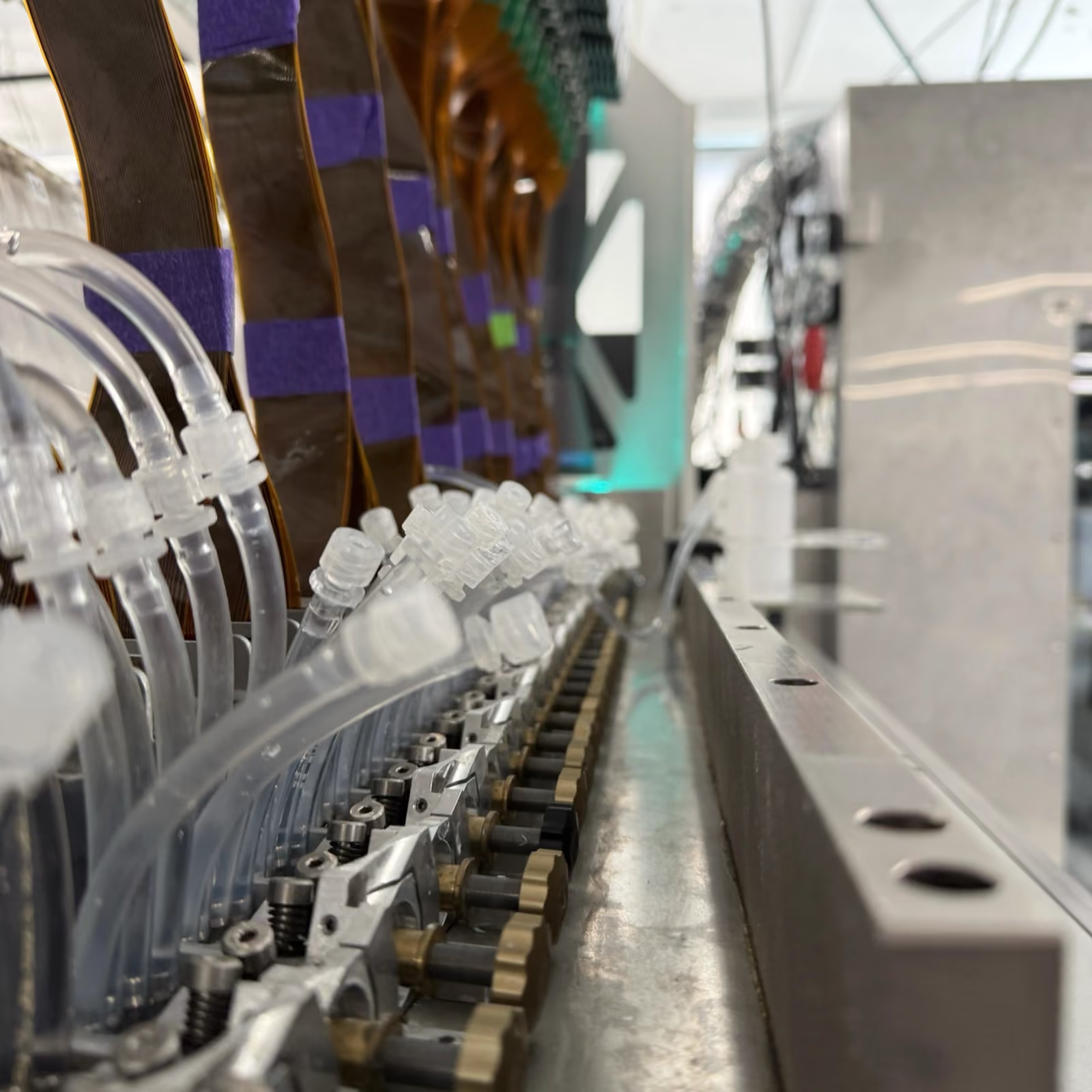
Pioneering DNA Data Storage appliances for Data Centers
As data to be stored keeps growing, traditional infrastructure cannot scale indefinitely. DNA introduces a new storage media engineered for density, longevity & resource efficiency.
Data storage solutions, secure by design & powered by DNA
Biomemory develops IT-friendly DNA Data Storage and cybersecurity solutions engineered for data center environments.
Our interoperable, modular architecture combines biosecure DNA media, industrialized end-to-end write/store/read processes, and interoperable IT interface to create a new storage tier optimized for density, longevity and operational efficiency.
DNA Data Storage server

_2026-03-02_13-17-17%202.avif)
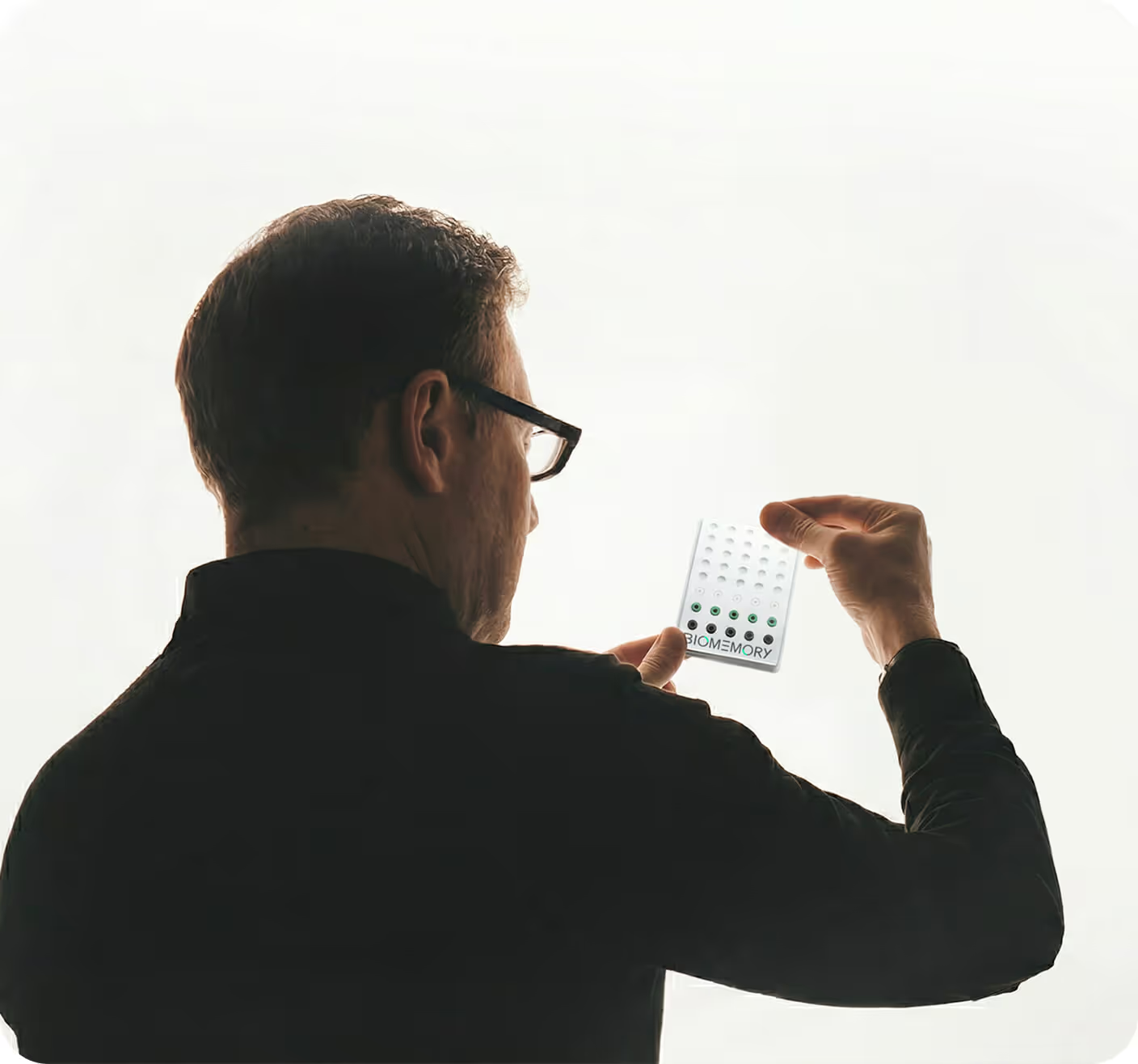
DNA Card
High reliability:
Enabled long-term data retention and readability, supported by an ISO-inspired qualification framework and a fully validated end-to-end process designed for Enterprise-grade quality.
Sustainable & cost-efficient:
Ultra-low energy at rest and biologically produced consumables structurally promise lower long-term infrastructure cost, combined with lower operational cost than other data storage solutions.
Maximum security:
Air-gapped and biosecure by design, our synthetic DNA media and fully-controlled workflows are designed to support high-security data environments and strong cybersecurity levels.
Scalable by design:
Engineered to maximize rack-level data storage density while maintaining the modular architecture, enabling seamless hardware upgrades and long-term compatibility with the evolution of the data center environment.
Biomemory’s solutions: industrial performance standards

As silicon-based storage media reach their limit, the future is molecular
Global data creation is exploding. Only 30% of the world’s data is durably stored. Data centers already consume around 2% of global electricity. As volumes double every few years, the silicon-based storage model is reaching structural limits.
DNA introduces a fundamentally different data storage paradigm. By combining molecular stability with modular, data center-compatible system architecture, it enables a new storage tier optimized for extreme density, long-term readability, and structural energy efficiency.
Molecular storage does not replace silicon. It extends it. The data centers of the future will integrate electronic and molecular layers, each designed for its optimal role. DNA becomes the ultra-durable, ultra-dense foundation within a multi-tier infrastructure.
DNA Data Storage is the first industrial step toward molecular Information Systems, where preservation, search, and computation ultimately converge.
Scale data storage beyond limits.
Biomemory’s ambition is to restore scalability to data infrastructure. By introducing a molecular data storage tier engineered for data centers, we enable organizations to store more, spend less, reduce environmental impact, and secure critical data for the long term.
Higher density. Same footprint.
DNA Data Storage promise is to dramatically increases storage density within standard data center footprints. Organizations can extend their storage capacity without proportionally expanding space, power, or hardware cycles.
Lower costs. Lower emissions.
Ultra-low energy at rest and biologically produced consumables enable structurally lower long-term infrastructure and operational costs. The result is a more sustainable data storage model with reduced emissions and resource dependency.
Smarter tiers. Stronger security.
As a new storage layer, molecular modular systems increase data lifecycle granularity across multi-tier architectures, improving resilience, long-term readability, and cybersecurity levels, while preparing the infrastructure for future molecular search and compute.

CEO
Storage platform evolution: scaling up to meet market needs
A strong ecosystem recognition
Clients
Investment
Support
Data Storage
Demystifying molecular storage
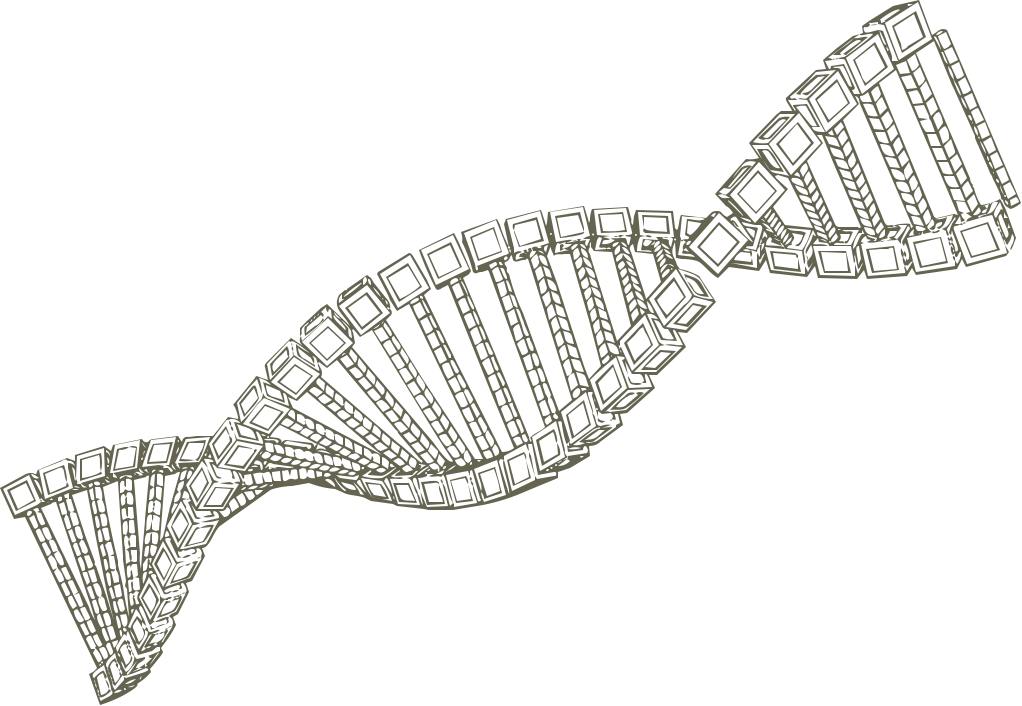
DNA Data Storage translates binary digital content into synthetic DNA strands. Binary data is converted into a molecular code, corresponding DNA strands are then synthesized, physically stored into a container (DNA Card), and later read, using available DNA-reading technologies. Biomemory industrializes this process into rackable storage servers designed for data center environments.
As data volumes scale, traditional architectures face structural physical, economic, and environmental limits. DNA introduces a new storage tier designed for long-term scalability. DNA has been selected as the molecule of choice for cold storage applications, for many combined reasons: very stable molecule, especially in its double-helix form; broad knowledge base and availability of massive characterization data; strong global trust in stability, reliability and longevity, in line with cold storage IT requirements; availability of DNA reading commercial equipment, currently and as long as human DNA shall be read; ability to replicate DNA with a very low error rate, including using living organisms (e.g. bacterias) for low-cost high-volume production.
DNA is inherently stable over extremely long periods. Millenia can be reached under very cold and hermetic special conditions. However, for IT-related applications, a retention and readability assurance of 50, 100 or 150 years is good enough. Biomemory is aligning with these market requirements and the enterprise-grade resilience levels, to offer the best cost & data accessibility trade-off. Along the specified life-time, DNA is stable and does not need to be refreshed or remastered, unlike other magnetic or electronics data storage media.
Yes. Biomemory uses fully synthetic, biosecure DNA blocks designed to prevent biological interaction, and compliant with the most stringent biosecurity regulation or recommendation. Our DNA, by design, cannot express proteins or interact with living systems. Biosafety is embedded by design at the molecular level, and validated by independent third party compliance testing
DNA Data Storage is designed as a new data storage tier within standard multi-tier architectures. Our storage servers interface with existing data center environments through interoperable APIs, enabling seamless integration alongside traditional storage technologies. Biomemory is using the S3 de-facto standard interface for object storage systems, originally developed by AWS, and now Open Source.
DNA enables structurally lower long-term total cost of ownership. Ultra-low energy consumption at rest, elimination of frequent hardware refresh cycles, and biologically manufactured consumables reduce both operational and capital expenditures (CapEx) over time. Biomemory has developed a roadmap towards a very low operational cost (OpEx) with low-cost consumables and high-level of automation, along with affordable CapEx compatible enterprise budget, and cloud-providers profitability.
DNA Data Storage is optimized for high-value, long-term, cold data. Typical use cases include archival preservation, regulated datasets, AI training data sets, compliance records, and critical backups requiring durability and integrity over decades.
Data storage is the primary application target of Biomemory, but cybersecurity augmentation is also strong a focus. As the technology matures, molecular systems will also offer unique properties for parallelism and programmability. Over time, this opens pathways toward molecular-scale search and compute capabilities, extending performance beyond traditional microelectronic architectures.