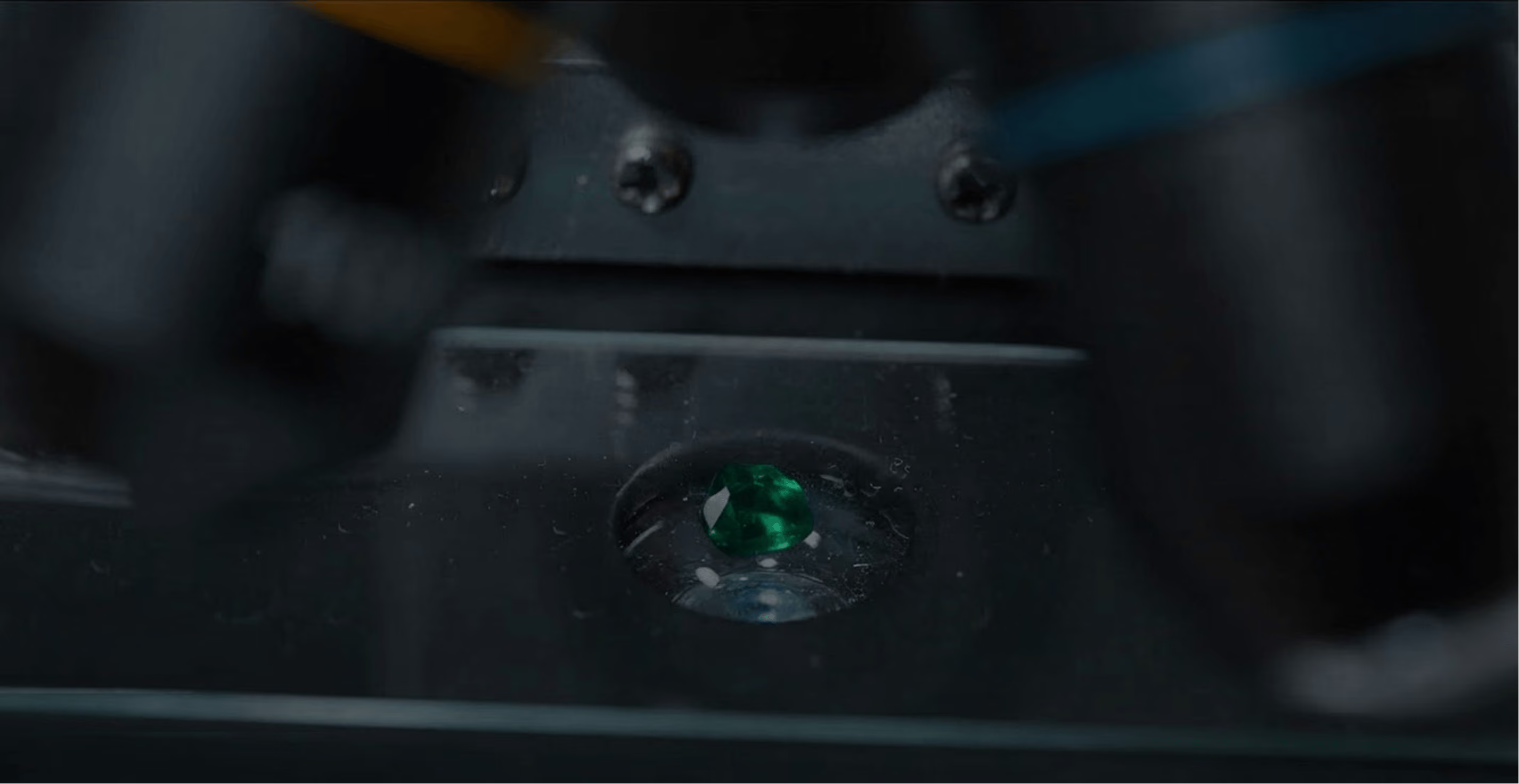
Data storage, secure by design and powered by DNA
How Biomemory synthesizes, encodes, and stores data in DNA, and why the medium is worth industrializing.
Selection and encryption
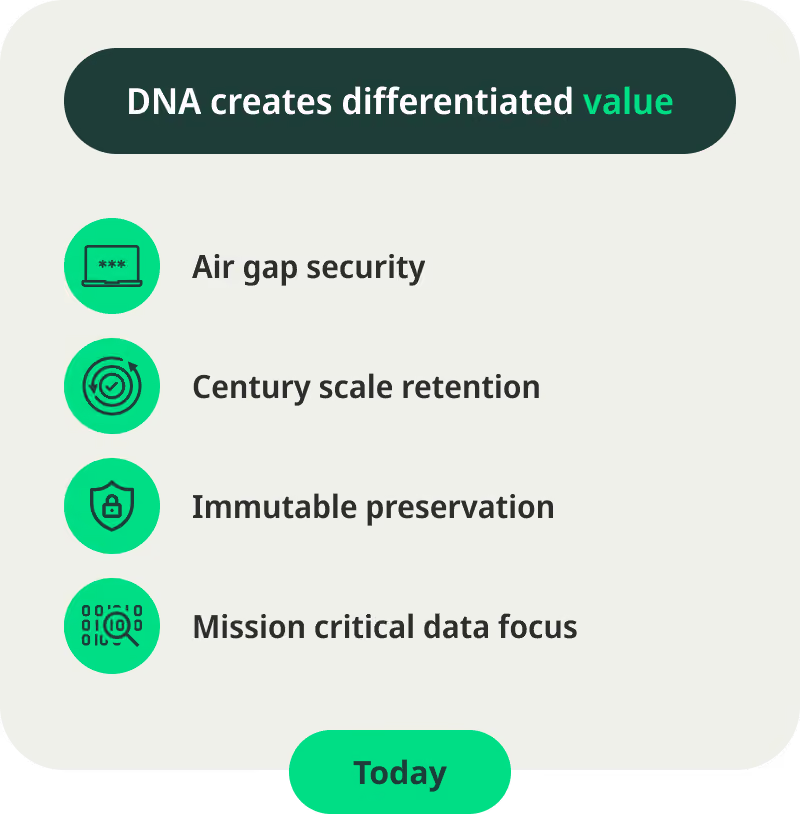
The customer identifies the key material or record in scope, and it is encrypted before it leaves their environment. DNA encoding under managed custody. The encrypted package is encoded into synthetic DNA and held offline, in-jurisdiction, and separated from the systems it protects. Authorized recovery. Recovery is a measured, designed to restore the information only through an authorized process, never an operational one.
File Storage Request
File Recovery Request
Encode / Translate
Write
(3D enzymatic printing)
Enzyme :
low energy, fast assembly
Store
Harvest all strands
_2026-03-02_13-17-17%202.avif)
Store
Locate
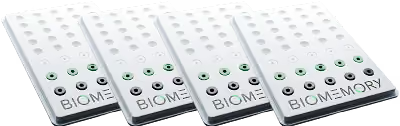
Biomaster's mission
find & locate the right file
Read & Connect
Sequencing & error
correction / detection
Rebuild file
Our platform protects organizations from data exposure
How we make the DNA
Biomemory is producing biologically key ingredients, DNA blocks and enzymes to synthesis its DNA media rather than purchasing them from third parties, one half of the vertical integration that spans the full stack from molecular biology to enterprise software.
Controlling the DNA and enzyme supply chains allows reducing writing costs and facilitates faster optimizations. We are also using aqueous reactions to write our DNA media as part of DATA center integration.
The DNA blocks have been designed to prohibit the synthesis of sequences of concern during DNA synthesis, thus facilitating biosecurity compliance. As consequence, these DNA blocks can only be used to encode DATA.
How we store it
Biomemory stores encoded DNA across two platforms: In our Paris research facilities and our DNA production facility in Boston.
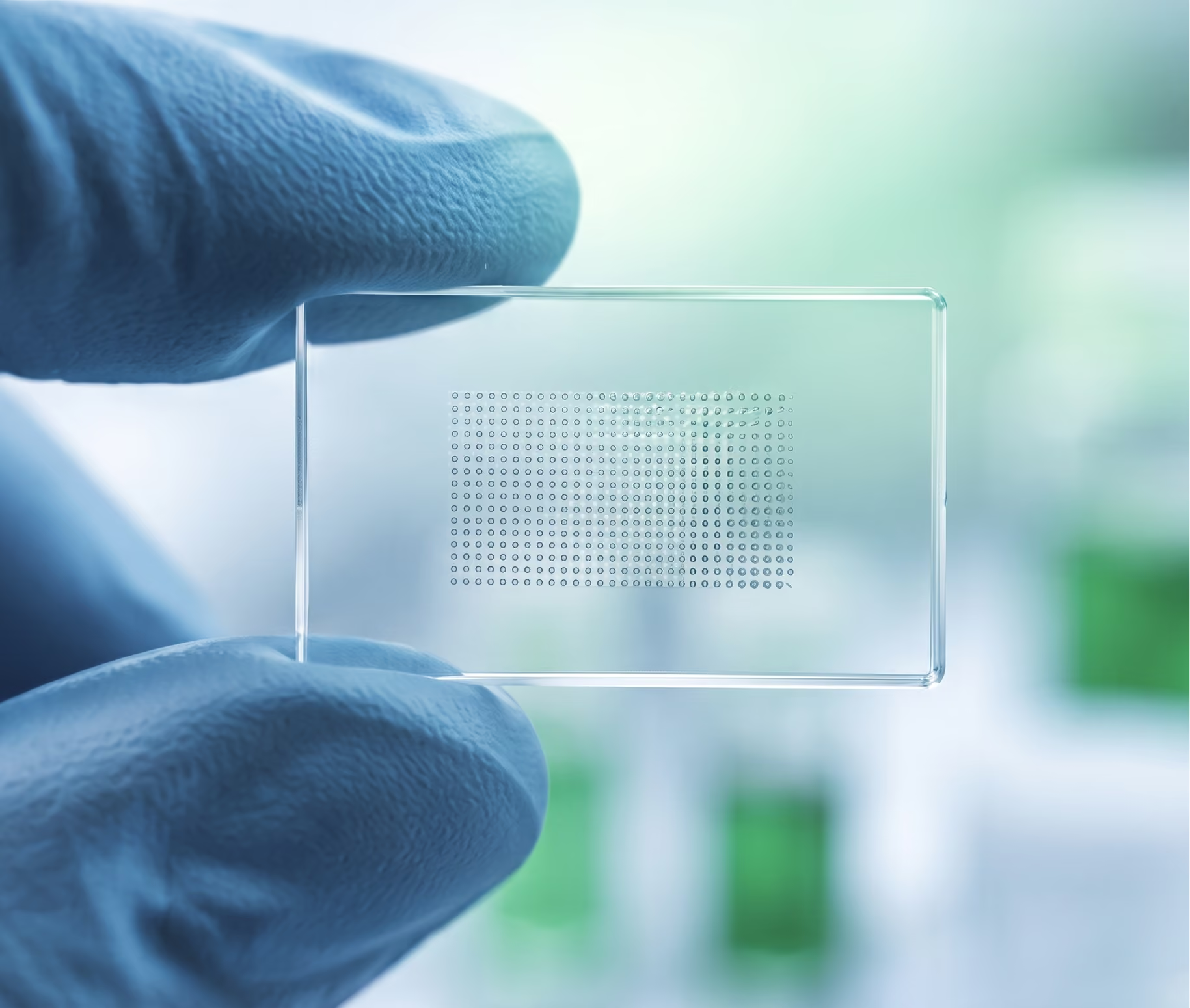
DNA is a million times denser than current data storage media.
As a storage medium, DNA holds on the order of one million times more data per unit volume than physical data storage, a property of the molecule rather than a Biomemory product specification, and it is why DNA is worth industrializing.
Longevity and isolation follow from how the medium is used: data held offline at rest, separated from the active control plane and removed from the network-reachable attack surface, designed for multi-decade readability, with qualification in progress.
Where it sits
DNA sits beneath tape and cloud as a preservation and recovery layer. Density is why the medium is worth industrializing. It is not a claim that a Biomemory system today replaces a tape library. For memory it competes only for the small, symbolic layer. For keys it competes with the safeguarded key component.
Economics
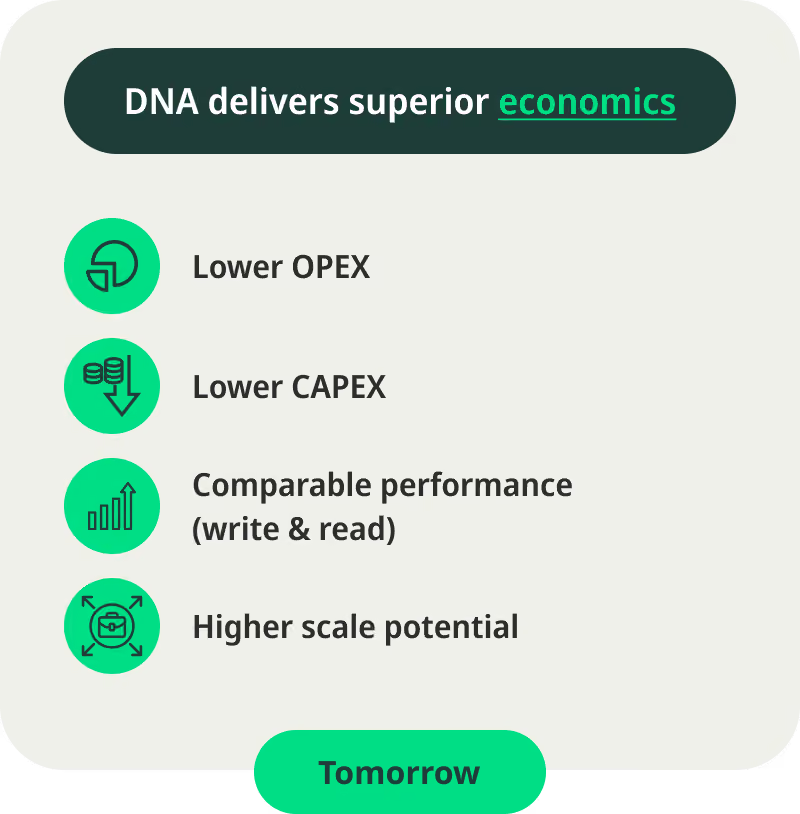
The economic case for DNA is structural rather than a single multiple. Once written, DNA needs no active power to preserve data at rest, unlike disk or tape, which require ongoing refresh cycles. The consumables are biologically produced. We do not publish a cost comparison table, a total-cost-of-ownership multiple, or a payback figure; the retired ten-year TCO comparison does not appear on the site in any form.
Biosecurity
Biomemory DNA is fully synthetic, designed to prevent biological interaction, and unable to express proteins.
Integration
Scality, a global leader in data infrastructure software for AI-era storage at scale, is our first software platform partner: both a technology partner, whose object storage platform will manage DNA as an ultra-secure cold archive tier, and a route to market into the enterprises, governments and service providers that already run Scality.
Defensibility
Biomemory’s end-to-end process, from molecular biology to enterprise software, is patented
REQUEST
REQUEST
_2026-03-02_13-17-17-2.avif)
Answers, not deflections
DNA Data Storage translates binary digital content into synthetic DNA strands. Binary data is converted into a molecular code, corresponding DNA strands are then synthesized, physically stored into a container, and later read, using available DNA-reading technologies. Biomemory industrializes this process into rackable storage servers designed for data center environments.
As data volumes scale, traditional architectures face structural physical, economic, and environmental limits. DNA introduces a new storage tier designed for long-term scalability. DNA has been selected as the molecule of choice for cold storage applications, for many combined reasons: very stable molecule, especially in its double-helix form; broad knowledge base and availability of massive characterization data; strong global trust in stability, reliability and longevity, in line with cold storage IT requirements; availability of DNA reading commercial equipment, currently and as long as human DNA shall be read; ability to replicate DNA with a very low error rate, including using living organisms (e.g. bacterias) for low-cost high-volume production.
DNA is inherently stable over extremely long periods. Milennia can be reached under very cold and hermetic special conditions. However, for IT-related applications, a retention and readability assurance of 50, 100 or 150 years is good enough. Biomemory is aligning with these market requirements and the enterprise-grade resilience levels, to offer the best cost & data accessibility trade-off. Along the specified life-time, DNA is stable and does not need to be refreshed or remastered, unlike other magnetic or electronics data storage media.
Yes. Biomemory uses fully synthetic, biosecure DNA blocks designed to prevent biological interaction, and compliant with the most stringent biosecurity regulation or recommendation. Our DNA, by design, cannot express proteins or interact with living systems. Biosafety is embedded by design at the molecular level, and validated by independent third party compliance testing
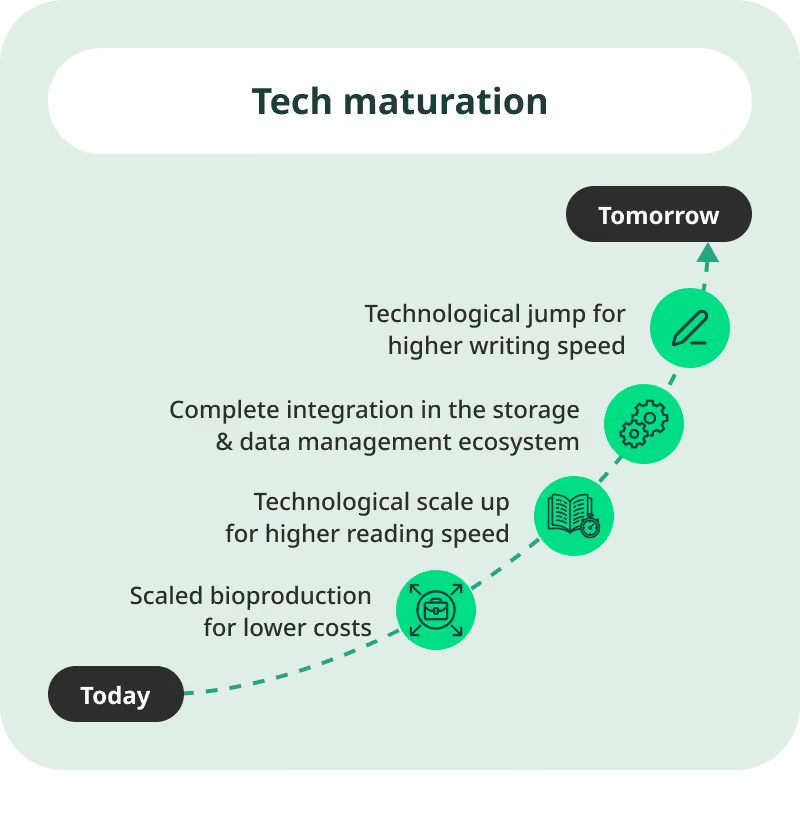
DNA enables structurally lower long-term total cost of ownership. Ultra-low energy consumption at rest, elimination of frequent hardware refresh cycles, and biologically manufactured consumables reduce both operational and capital expenditures (CapEx) over time. Biomemory has developed a roadmap towards a very low operational cost (OpEx) with low-cost consumables and high-level of automation, along with affordable CapEx compatible enterprise budget, and cloud-providers profitability.
DNA Data Storage is optimized for high-value, long-term, cold data. Typical use cases include protection, regulated datasets, AI training data sets, compliance records, and critical backups requiring durability and integrity over decades.
Data storage is the primary application target of Biomemory, but cybersecurity augmentation is also strong a focus. As the technology matures, molecular systems will also offer unique properties for parallelism and programmability. Over time, this opens pathways toward molecular-scale search and compute capabilities, extending performance beyond traditional microelectronic architectures.